
Introduction
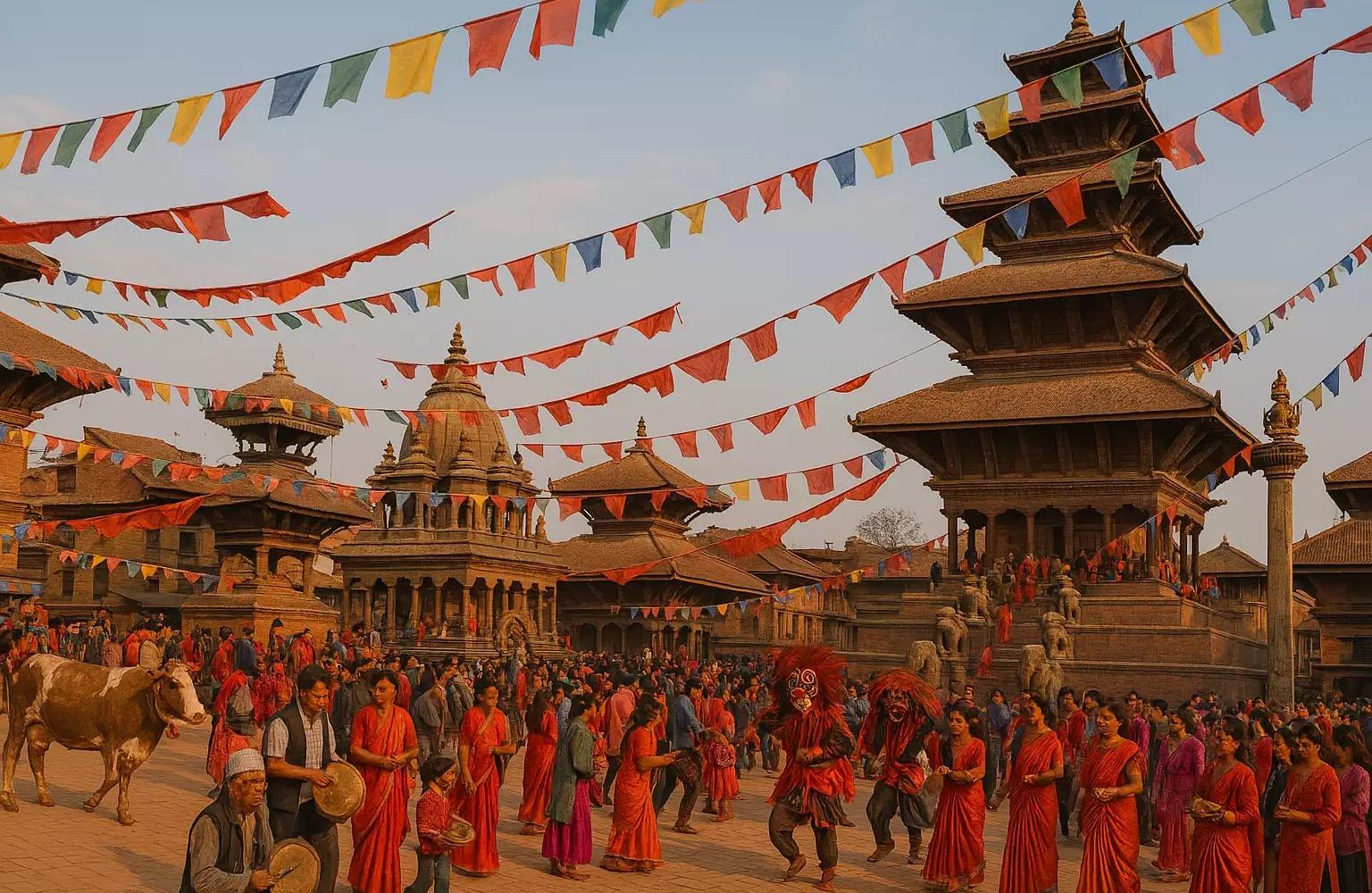
When most people think of Nepal, the first images that come to mind are often Mount Everest, the Himalayas and breathtaking trekking routes. But beyond its dramatic landscapes lies something equally remarkable: Nepali culture.
Nepal is home to numerous ethnic communities, languages, religious traditions and regional customs. From the busy streets of Kathmandu to villages in the Himalayas, hills and Terai, cultural traditions remain deeply connected to everyday life.
Religion, family, festivals, food, music, clothing and hospitality all contribute to Nepal’s identity. While customs vary significantly between communities and regions, they come together to create a diverse yet distinctly Nepali way of life. The Nepal Tourism Board similarly describes Nepal’s culture as a combination of different regional customs and traditions, with religion, festivals and food playing important roles in everyday life.
A Country of Cultural Diversity
One of the most fascinating things about Nepal is that there is no single experience that completely defines Nepali culture.
Different communities have preserved their own languages, clothing, food, festivals, music, architecture and social traditions for generations.
The Newar communities of Kathmandu Valley, Tamang communities of the surrounding hills, Sherpa communities of the Himalayan region, Tharu communities of the Terai, and Gurung, Magar, Rai, Limbu, Maithil and many other communities each contribute something unique to Nepal’s cultural landscape.
This diversity means that travelling just a few hours within Nepal can introduce you to completely different cuisines, languages, clothing styles and traditions.
Yet despite these differences, values such as family, hospitality, respect for elders and community are commonly visible throughout Nepali society.
Religion and Spirituality in Nepali Life
Religion has strongly influenced Nepal’s architecture, festivals, traditions and way of life.
Hinduism and Buddhism have particularly deep historical roots in Nepal, and their traditions often exist alongside one another. Nepal is also home to followers of Islam, Christianity, Kirat traditions, Bon and other faiths and spiritual practices.
Kathmandu Valley offers some of the clearest examples of this cultural relationship.
Hindu temples can be found close to Buddhist stupas, while certain festivals and sacred places attract people from different religious backgrounds.
Sites such as Pashupatinath, Swayambhunath, Boudhanath and Lumbini are not simply tourist attractions. They represent centuries of spiritual history and remain important places of worship today.
This coexistence has become one of the most distinctive features of Nepal’s cultural identity.
Festivals: When Nepal Comes Alive
Festivals are an essential part of Nepali culture.
Throughout the year, communities gather for religious ceremonies, family celebrations, music, dancing and feasts.
Dashain
Dashain is one of Nepal’s most important festivals.
Families travel across the country to reunite with relatives. Elders traditionally give younger family members blessings, tika and jamara, while homes are cleaned and special meals are prepared.
For many families, Dashain is as much about being together as it is about religious celebration.
A Wikimedia Commons photograph documenting a traditional Dashain ritual is available under a Creative Commons Attribution-ShareAlike license.
Tihar
Soon after Dashain comes Tihar, often known for lights, flowers and colourful decorations.
Different days traditionally honour animals such as crows, dogs and cows, while Lakshmi Puja is dedicated to the goddess of wealth and prosperity.
Homes are decorated with lamps and rangoli, while songs such as Deusi and Bhailo can be heard in neighbourhoods around the country.
The celebration of the relationship between brothers and sisters during Bhai Tika is another important part of the festival.
Other important festivals
Nepal’s cultural calendar extends far beyond Dashain and Tihar.
Celebrations such as Teej, Chhath, Indra Jatra, Gai Jatra, Buddha Jayanti, Maha Shivaratri, Maghe Sankranti, Holi and different forms of Losar reflect the country’s diverse communities and traditions.
Some festivals are celebrated nationwide while others remain strongly connected to particular ethnic communities or regions.
Traditional Nepali Clothing
Traditional clothing provides another beautiful representation of Nepal’s cultural diversity.
The Daura Suruwal and Dhaka Topi are among the most recognisable examples of traditional men’s clothing.
Women may wear sari and cholo, gunyu cholo and numerous regional or ethnic garments depending on their community and occasion.
But Nepal’s traditional clothing extends far beyond a single national style.
Newar women are often associated with Haku Patasi, while Himalayan communities have traditional Tibetan-influenced clothing. Gurung, Magar, Tamang, Tharu, Limbu and other communities also maintain distinctive clothing and jewellery traditions.
Traditional clothing remains especially visible during weddings, festivals, cultural programmes and religious ceremonies.
In modern cities, everyday fashion may look similar to anywhere else in the world, but cultural occasions often bring these traditional designs back into full display.
Nepali Food: Culture Served on a Plate
You cannot truly experience Nepali culture without experiencing its food.
The most familiar everyday meal is dal bhat, normally consisting of rice, lentil soup, vegetables, pickles and sometimes meat or additional side dishes.
But describing Nepali food only through dal bhat would miss much of its diversity.
Some popular foods include:
- Momo – dumplings filled with meat or vegetables
- Sel roti – a traditional ring-shaped rice bread
- Gundruk – fermented leafy vegetables
- Dhido – a traditional thick porridge commonly made using millet or maize flour
- Yomari – a Newar delicacy made from rice flour with a sweet filling
- Chatamari – sometimes described as a Newari rice-flour flatbread
- Thakali Khana – a carefully balanced meal famous for its dal, rice, vegetables, pickles and curries
- Choila – a well-known spiced meat dish particularly associated with Newar cuisine
Food also plays an important role during festivals and family gatherings. Particular dishes may be prepared only during specific celebrations, making recipes part of cultural memory passed between generations.
Art, Architecture and Craftsmanship
Nepal’s cultural history can also be seen in its buildings.
Walking through the historic areas of Kathmandu, Patan and Bhaktapur reveals intricately carved wooden windows, brick courtyards, stone sculptures, temples and multi-tiered pagoda roofs.
Many of these architectural traditions developed through generations of highly skilled Newar artisans.
Nepal is also known for traditional arts such as Paubha and Thangka paintings, metal statues, pottery, wood carving, weaving and handmade jewellery.
These are more than decorative objects. Many contain religious symbolism, historical stories and techniques that artisans have preserved over centuries.
Music and Dance
Music accompanies almost every major celebration in Nepal.
Traditional instruments such as the madal, sarangi, bansuri, damphu and various drums and cymbals remain important parts of cultural performances.
Different communities have their own musical traditions and dances.
Tamang Selo, Maruni, Lakhey dance, Deuda, Sakela and numerous regional folk traditions demonstrate how music can preserve history and identity even without written records.
Modern Nepali music has naturally evolved as well, combining folk influences with rock, pop, hip-hop and electronic music.
Yet traditional melodies continue to appear at weddings, festivals and community celebrations.
Namaste and the Culture of Hospitality
One of the first Nepali words many visitors learn is Namaste — नमस्ते.
Usually accompanied by palms placed together, it is commonly used as a respectful greeting.
Hospitality is another important aspect of Nepali social life.
Guests are frequently offered tea, food or something to drink soon after entering a home. In many families, allowing a visitor to leave without offering something to eat can almost feel inappropriate.
Respect toward parents, grandparents and elders also remains deeply rooted in many households.
Terms used for relatives can extend beyond biological family members, reflecting Nepal’s strongly community-oriented social structure.
Family and Community
Family remains at the centre of Nepali culture.
Major decisions, festivals, weddings and religious ceremonies often involve extended family members rather than only parents and children.
Festivals such as Dashain become massive annual family reunions partly because people living in cities or abroad return to their hometowns and villages.
Community is equally important.
Weddings, funerals, religious ceremonies, harvests and festivals have traditionally involved neighbours and extended social networks helping one another.
Although urbanisation and migration are changing some of these practices, community relationships continue to play an important role across Nepal.
Tradition in a Modern Nepal
Nepali culture is not frozen in history.
Young Nepalis use smartphones, follow international fashion, consume global entertainment and increasingly live, study and work around the world.
At the same time, traditional festivals remain crowded, cultural clothing continues to appear at important events, traditional foods remain part of family celebrations, and younger generations continue rediscovering folk songs, dances and regional identities.
This combination of modern life and centuries-old tradition is one of the most interesting aspects of contemporary Nepal.
A young person might spend the day working in technology, wear western clothes and listen to international music — and still return home for Dashain tika, attend a traditional wedding and celebrate their community’s festivals.
Culture adapts rather than simply disappearing.
Preserving Nepali Culture for Future Generations
Nepal’s cultural diversity is one of the country’s greatest treasures.
Preserving it does not necessarily mean rejecting modernisation. Instead, it means documenting languages, teaching traditional skills, protecting historic architecture, supporting local artisans, sharing traditional recipes and allowing younger generations to understand where their traditions originated.
Every festival celebrated, folk song performed, traditional recipe taught and historical building protected helps carry a small part of Nepal’s story forward.
Conclusion
Nepali culture cannot be represented by a single temple, festival, dress or meal.
It is found in the sound of a madal during a village celebration, the smell of sel roti cooking during a festival, prayer flags moving beside a Himalayan monastery, crowded family homes during Dashain, lamps glowing during Tihar and generations gathering around the same table.
Nepal may be famous throughout the world for its mountains, but its greatest richness lies equally in the people, traditions and communities living beneath them.
And that is what makes Nepali culture truly extraordinary.


admin
A writer and contributor to Love The Nepal, telling stories about the places, people and culture of Nepal.